
Honest RPG Game Review 2026 – Gameplay, Story & Performance
645 views
A beautiful RPG can still be frustrating.
Maybe the combat looks fantastic in trailers but becomes repetitive after ten hours. Maybe the story promises meaningful choices, yet every decision eventually funnels you toward the same ending. Or perhaps your PC technically meets the requirements and still struggles with stutter, shader compilation, or inconsistent frame pacing.
That’s the reality of RPGs in 2026.
The genre is bigger than ever, but bigger doesn't automatically mean better. This review looks at the current RPG landscape through three things that actually matter after the screenshots and launch trailers are forgotten: gameplay, story, and real-world performance.
Rather than pretending every RPG is equally impressive, the better approach is to look at what current releases are actually asking players to compromise.
The RPG genre in 2026 feels unusually diverse
There isn't really one definition of an RPG anymore.
You can have a huge open-world adventure, a tightly designed soulslike, a turn-based tactical game, or an action RPG built around character builds and loot. GameSpot's current RPG recommendations reflect that breadth, pointing out that RPG mechanics now regularly overlap with action, strategy, and other genres.
That variety is good news.
It also makes generic "best RPG" lists less useful.
A player who loves exploration might find a linear action RPG disappointing. Someone who cares about dialogue and branching decisions may have little patience for an RPG whose progression is mostly equipment numbers.
So my first test is simple: does the RPG understand what kind of game it wants to be?
The strongest ones usually do.
Gameplay: numbers aren't enough anymore
RPG progression used to be remarkably easy to explain.
Gain experience. Level up. Increase statistics. Find better equipment. Repeat.
Modern RPGs have pushed far beyond that loop.
Build systems now influence how combat actually feels. Cyberpunk 2077, for example, has evolved considerably through its 2.0 overhaul and later updates, with perks, cyberware, weapons, mobility and hacking creating genuinely different approaches to combat. PlayForGames' existing 2026 Cyberpunk review already covers that game's progression and combat in depth, so it makes more sense here to use it as a benchmark rather than repeat the same review.
Then there's Beast of Reincarnation, released in August 2026.
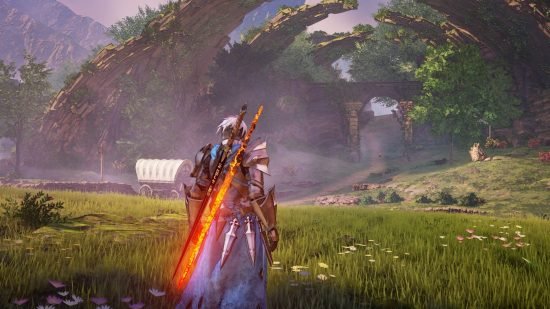
Its combat takes a stranger route. Emma fights alongside Koo, with the game mixing real-time action and turn-based elements. The official Steam listing describes the pair as a combined combat unit, with Emma's sword abilities and Koo's commands working together.
That kind of system is much more interesting than simply adding another skill tree.
But there's a catch.
Complexity can become clutter.
An RPG with 70 passive bonuses isn't necessarily deeper than one with 20 meaningful abilities. If players spend more time reading tooltips than making decisions during combat, something has gone wrong.
The best progression systems change what you do, not merely the size of a damage number.
Story: atmosphere matters, but choices matter more
RPG stories have another problem in 2026: presentation has become so polished that it can disguise shallow writing.
Beautiful facial animation isn't character development.
A huge map isn't world-building.
And 40 hours of dialogue doesn't automatically make a narrative memorable.
The better RPG stories give characters reasons to behave the way they do and then let the player's decisions interfere with those relationships.
That's why games such as Lies of P remain interesting examples. The Switch 2 Complete Edition, released in August 2026, combines the original game with the Overture expansion and expands the broader story of Krat and its puppet industry. Nintendo describes the package as the complete narrative experience, rather than simply a technical port.
Storytelling doesn't have to mean hundreds of branching endings, either.
Sometimes a small decision, a changed relationship, or a piece of environmental information is enough.
What matters is that the game makes you care.
The biggest story weakness: artificial choice
This is where plenty of modern RPGs stumble.
A dialogue menu gives you three responses.
You choose one.
The character reacts.
Five minutes later, the same quest continues almost exactly as it would have anyway.
That's not necessarily bad design. Developers often need to control production costs and narrative pacing. But players can feel the difference between genuine reactivity and a choice that exists mostly to create the appearance of role-playing.
A convincing RPG doesn't need to branch everywhere.
It needs to make certain choices stick.
Performance: the part screenshots can't show
This is where the 2026 RPG generation gets complicated.
Modern visuals are expensive.
The difference between "runs" and "runs well" can be enormous.
Consider The Elder Scrolls IV: Oblivion Remastered. Bethesda's official PC requirements specify a minimum of 16 GB RAM, a Radeon RX 5700 or GeForce GTX 1070 Ti, DirectX 12, 125 GB of storage and an SSD. The recommended configuration moves to 32 GB RAM and a Radeon RX 6800 XT or RTX 2080.
That's a substantial hardware requirement for a remaster.
And it illustrates an uncomfortable reality: resolution isn't the only performance variable anymore.
CPU load, VRAM, asset streaming, shader compilation and frame-time consistency all matter.
A game displaying 60 FPS isn't necessarily smooth if frame times repeatedly spike.
What PC gamers should actually look at
Valve's Steam Hardware & Software Survey provides useful context here. In June 2026, 16 GB was the most common system-memory configuration among Windows Steam users at 41.43%, while 32 GB accounted for 37.82%. 1080p also remained a dominant display resolution.
That matters for RPG developers.
A game shouldn't be judged only on a high-end RTX system.
There are still millions of players using mainstream hardware.
For someone running a mid-range gaming PC, I'd prioritize settings in this order:
Frame-time consistency
Texture quality according to available VRAM
Shadows and volumetric effects
Ray tracing
Ultra presets
Ultra isn't a magic word.
Dropping from Ultra to High can sometimes produce a much better experience while barely changing the image during actual gameplay.
A useful comparison of 2026 RPG experiences
RPG | Gameplay | Story | Performance considerations | Best for |
|---|---|---|---|---|
Cyberpunk 2077 | Excellent build variety and action combat | Strong character writing | Demanding at high settings | Open-world RPG fans |
Beast of Reincarnation | Interesting hybrid combat | Ambitious, character-focused | PC requirements target 1080p with upscaling | Players wanting something different |
Lies of P: Complete Edition | Precise soulslike combat | Atmospheric and tightly structured | Switch 2 version offers portable play | Soulslike fans |
Oblivion Remastered | Classic open-world RPG freedom | Quest-driven fantasy | 125 GB SSD requirement; 32 GB RAM recommended | Exploration-focused players |
The comparison isn't about declaring one universal winner.
That's almost impossible with RPGs.
A game can have mediocre combat and an incredible story. Another can have spectacular mechanics but forgettable characters.
Beast of Reincarnation shows the risk of launching ambitious RPGs
The most interesting example right now might be Beast of Reincarnation because its launch demonstrates how quickly player feedback can expose weaknesses.
The game released on August 3, 2026, with a distinctive post-apocalyptic setting in Japan in the year 4026. Its design combines Japanese visual influences, science fiction, action combat and the relationship between Emma and Koo.
But launch reception wasn't entirely smooth.
Its first major update, version 1.0.7, addressed camera behavior, text sizing, boss balance, remappable interaction controls and story pacing. The update also changed how frequently affinity conversations could occur and adjusted cinematic frame-rate behavior.
That is exactly why a 2026 RPG review shouldn't simply repeat launch-day impressions.
Patches are part of the game now.
A review written on release day can become outdated surprisingly quickly.
What makes an RPG worth your time in 2026?
For me, the strongest combination looks something like this:
Combat that rewards learning rather than grinding
Progression that changes your playstyle
Characters who feel different from one another
Side quests with a reason to exist
A world that rewards curiosity
Graphics that support the atmosphere rather than dominate it
Stable frame pacing
Sensible PC settings
A story that respects the player's time
Notice what's missing?
"100-hour campaign."
Longer isn't automatically better.
A 35-hour RPG with excellent quests can be more memorable than a 100-hour open world filled with repetitive activities.
The same applies to maps. A giant world with nothing interesting between objectives can feel smaller than a compact environment packed with secrets.
Performance scorecard: what I'd check before buying
Before spending money on a demanding RPG, check three things.
First, check the official system requirements. Don't assume your GPU is sufficient simply because its name sounds newer.
Second, check recent player reports rather than only launch reviews. Updates can completely change technical performance, quest bugs and balancing.
Third, look at the actual resolution and upscaling target. A requirement claiming "1080p 60 FPS" may depend on DLSS, FSR or reduced settings. Beast of Reincarnation, for instance, lists 1080p/60 FPS at medium settings with DLSS or FSR3 Performance in its recommended specification.
That's a very different promise from native 1080p rendering at maximum settings.
Is a 2026 RPG worth buying?
Usually, yes—but not blindly.
The current RPG lineup has plenty of genuinely interesting games. The bigger issue is choosing the right one for your taste and hardware.
Pick Cyberpunk 2077 if you want a mature open-world action RPG with strong character-driven quests.
Look toward Beast of Reincarnation if unusual combat systems and a darker science-fiction setting appeal to you.
Choose Lies of P if precise combat and atmospheric world design matter more than open-world freedom.
Go for Oblivion Remastered if exploration, quests and traditional Elder Scrolls-style freedom are the priority.
There's no shame in skipping an RPG, either. Forty hours is a serious investment.
FAQ
What is the best type of RPG in 2026?
There isn't one winner. Action RPGs are ideal for players who want immediate combat, while turn-based and tactical RPGs generally offer more deliberate decision-making.
Do you need 32 GB RAM for RPGs in 2026?
Not universally. Steam's June 2026 survey shows 16 GB remains the most common configuration, but demanding modern RPGs increasingly recommend or benefit from 32 GB.
Is ray tracing worth enabling in RPGs?
It depends on the game and hardware. For an atmospheric single-player RPG, ray-traced lighting can look excellent, but stable frame rates are usually more valuable than maximum visual settings.
Are older RPGs still worth playing in 2026?
Absolutely. Strong writing and satisfying progression don't expire just because a game is several years old. In fact, older RPGs can offer excellent value after patches, expansions and price reductions.
Should you trust a game's minimum PC requirements?
Treat them as a starting point, not a guarantee of a perfect experience. Check the intended resolution, quality preset, upscaling technology and whether an SSD is required.
Final verdict: RPGs are getting better, but they're also getting heavier
The RPG genre in 2026 is in a strange but exciting place.
Gameplay systems are more sophisticated. Stories are increasingly cinematic. Worlds are enormous. Yet hardware requirements are climbing, launch conditions can be rough, and bigger budgets don't guarantee better design.
That makes honest reviewing more important.
Don't judge an RPG from a screenshot.
Don't judge it from a 30-second trailer.
And don't assume a 9/10 game is automatically the right game for you.
Look at the combat loop. Read about the story structure. Check the actual system requirements. Then ask the simplest question of all:
Would I still enjoy playing this after the first ten hours?
If the answer is yes, that's probably the RPG worth installing next.
RPG game review 2026
honest RPG review
RPG gameplay review
RPG story analysis
RPG performance test
Found this helpful? Share it!